


Our store has been restocked! Free enamel pin with orders of $30 or more (before shipping)

Want to see your library story in a comic? Email it to Gene! If we use yours you get a free print.

Library Comic is published two days a week, Monday and Wednesday. Book reviews Tuesday and Thursday.

We recommend you also read The Haunted Skull by Willow Payne and Gene’s friend’s Tim Allen Stories .


Graphic Novel Review: The Waiting by Keum Suk Gendry-Kim

The Waiting by Keum Suk Gendry-Kim. Translated by Janet Hong. Drawn & Quarterly, 2021. 9781770464575. 248pp.  

The Waiting is the second of Gendry-Kim’s graphic novels to be translated into English. (If you haven’t read the first, Grass, which is the story of a Korean comfort woman, it, too!) This is the story of a woman separated from her husband and son as they flee the fighting in what is now North Korea, at the start of the Korean War. The woman finds safety and makes a new life in the South but, like many, continues to wait to be reunited with her lost loved ones. Part of the narrative takes place in the present, which involves the woman (now old) and one of her daughters, a writer, and part of it in the past to tell the story of the mother’s life. It’s based on the life of Gendry-Kim’s mother and the lives of others she interviewed. 

As soon as I heard this book would be published in English, my wife, Silver, who was born in Busan, South Korea, had her sister send her a copy in Korean. Their father fled the North at about the same same time as the author’s mother. He left behind a wife and at least one son in addition to the other members of his family. Silver was incredibly moved by this book, and couldn’t stop crying as she read it. I loved it too. 

In place of a normal book review the two of us talked about the book and Silver’s father, in a conversation I’ve edited for clarity.  (-Gene)

Gene: Can you give a short pitch for The Waiting?

Silver: It’s the story of a mother who came to what is now South Korea from the North when the Korean War started, after the Japanese occupation ended. She lost her family along the way. It’s about her lifelong wait to see her family again. That’s her life. 

G: Can you explain the context a bit, for people who don’t know a lot of Korean history?

S: Korea is a small country on a peninsula between Russia, China, and Japan. We often suffered under occupations by those larger countries. In the beginning of the 1900s Japan occupied Korea for about 39 years, and we were only freed by their defeat at the end of WWII. The book begins at the tail end of that occupation. The mother in the story, her hometown was very close to Russia in the north, in what is now North Korea. In 1945 Japan surrendered, so that’s when we were supposedly freed, though it didn’t really happen right away. In the story you see Japanese people are still living in the mother’s hometown. Japanese people were governing Korea but when they lost the war and they had to go back home, but they had no means to leave. They were stuck in Korea, and were treated really badly. It was payback time. 

G: I know Korea was basically strip-mined, its forests cut down, and so many objects of cultural significance and even people were taken. 

S: It was terrible. Koreans had to learn to eat whatever they could find, often in the mountains. That’s why we have so many “mountain vegetables,” as you know. If it didn’t kill you when you ate it, it became food. This is probably why we so many different plants from the mountains and almost everything from the sea. 

(We both laugh because we’ve had some unique meals in Korea.)

S: My mom had a Japanese name because she couldn’t use her Korean name. No one was allowed to speak Korean at school. That went on for decades. I’m so proud that Korean culture survived that. But anyway…  In 1950, that’s when the struggle between the communist occupied North and the western-influenced South turned into a war. 

G: When the actual fighting reached the mother’s hometown, people fled. They headed south because they hoped it was going to be safer. Americans and American-backed Korean forces were fighting Russian- and Chinese-backed Korean soldiers, there were lots of foreign troops on the ground, and she had to leave her home with her husband, her son, and her newborn daughter on foot with nothing.

S: The infant daughter was crying, so the mother went to breastfeed her somewhere a bit private, and when she came back to meet her husband and her young son, they were gone. She couldn’t find them. She waited a bit. Then when she walked she ran into people from her neighborhood who said there were a bunch of families staying in a house together. She didn’t find her husband there but did run into her husband’s older brother who was all alone. 

G: He was just a bastard. He eventually ran away from her alone to catch a train and left her behind.  But she and her daughter end up making their way south and were evacuated from a port town in what is a fairly famous incident when she was on an American ship that went to Busan. 

S: Yes. I don’t think she lived in Busan for long. It was just jam packed with refugees. There someone introduced her to a man from North Korea who had a son. They end up married, though they each agree to keep looking for their families from the North. If their spouses show up, they agree their marriage will break up. Then they have two kids together, and one of those is the author in the story.

G: The mother ends up just waiting. And waiting and waiting and waiting. And it’s just that Korean sadness. 

(Silver is crying at this point. I realize we took refuge in remembering the details of the story to avoid talking about the reality of it. Since we’re talking as I walk her to work, I think everyone passing us on the bike path near the University of Washington must think we’re having a hell of a fight.)

Silver: It’s so painful.

G: There’s a ton of people who lost family members when the country was divided, and who have never seen or talked with them again. And there have been a few reunions, which are shown in the graphic novel too. Those started in the 80s, right?

S: The 80s reunions, when everyone was crying on TV, those were to help people who had become separated from each other in the war, who were in the South, to find others who were also in the South. They didn’t have another way to find their family members. That collective sadness. For months and months people were  glued to their TVs. In Yoido, which is where the South Korean Capital is, where the Congress meets, there were hand written signs and photos posted everywhere telling stories: “I’m looking for so and so, we were separated in this place, she’s my younger sister, she has these marks on her body, do you know this person? Please contact me.” It was horrendous. 

G: People went there and that’s how some found each other again?

S: Yes!

G: And your dad wouldn’t even try that? 

S:  No, he wouldn’t. he was too worried North Korean agents would find out he was alive and punish his family in the North, because he had worked for the Japanese government during the occupation. That’s why he had to flee suddenly when the communists came into his town. We kept telling him he was paranoid, “You might be able to meet your relatives, your cousins. You have nobody. Why don’t you go put your name and your story there?” And he was like no, no.

S: My dad was a broken person. He was so scared. I think of the guilt he carried because he left his family behind, because he had to flee so quickly.

G: Your father had a wife and kids there, right?

S: Yes. I know for sure he had at least one young son.

G: But of course I’ve been told your dad never talked about his daughters so who knows… (we laugh) And so later North Korea and South Korea got together to let some separated family members meet across the border?

S: Yes. People sent letters to a government department and it was like a lottery. They were chosen and matched with people they’d been separated from, and then they went to meet in the North, near the border.

G: Why was this book so moving for you, other than because of your father’s story?

S: Because the mother in the book is almost every mother that I know in Korea, in my parents’ age group, you know what I mean? Those uneducated women, they got married early, and their lives were all about their kids. Especially their sons. The writer’s mom loves her daughter — it reminds me of my relationship with my mom — but this is every mother’s story. She wants to see her son again. These women never had dreams I think. They got married to produce sons. They listened to their fathers and then their husbands. When the husbands died they listened to their sons. And that was going to be her life. But in the middle of that she lost her precious son and husband at the same time. 

After watching the movie based on the novel Kim Jiyoung, Born 1982 by Cho Nam-Joo, I think this is also a very feminist story about how opportunity was taken away from women in Korea. About all those moms. 

My aunt, my mom’s older sister, was married very young. My grandparents decided to marry her when she became a woman (I think when she started her period), when she was probably 13. Because of the comfort woman situation — they knew if she was married she wouldn’t be taken by the Japanese government to be a sex slave for Japanese soldiers. So they sent my aunt to get married to a guy in another town. That’s why my mom was all alone after her mom died. She wasn’t even 10 when she became the mother to her family, the mother to her brothers, because she was the only girl. She was too young to be taken as a comfort woman. 

And my dad, my poor dad, he was kind of like the asshole brother-in-law in the book, he decided to flee. He left alone. His family did tell him to go, but he made the decision to do it. He left his family behind. And he was so broken he was never able to love us. 

This is not good. I’m going to work and I’m crying.

(we both laugh)

S: The story in the book about eating fish is so hilarious. Korean moms do that all the time. When you eat fish in Korea you buy the whole fish, often alive, but we never bought live fish because we were so poor. So when the mom in the book cooks the fish, she always says that she loves the head best and she gives the meaty part to her husband and son, and the tail goes to the girls. Moms always lie and say they love the head. But who the fuck loves eating the head? Nobody. The writer, her daughter, realizes that. But her son has no idea. He tells his mom, here’s the head of the fish, you love this! The writer, his sister, has to tell him the truth. She just said that to feed them. How oblivious was her son? Pay some attention!

G: But I’ve heard your dad would eat all of the fish, Silver, including the fins and all the bones. So I’m not sure how that applies! 

(we both laugh)

S: He did. Yeah.  

G: Good. Remember the laughs.

S: Gendry-Kim did so well. The little details in the book impressed me, like the mom’s friend, who she meets outside their apartments. They call each other “chingu” (“friend”) because they never use names. My mom called her friends “friend.”  My mom never called her friends by their names because she never knew them. They were “so-and-so’s mom.” Sometimes she’d try to describe them to differentiate them but that was nearly impossible because they all had the same bad perm. 

I was so impressed and touched by the author because she knows details like that. She gets the culture. She’s not pretending. She’s sharing these old women’s stories, and I am so appreciative. 

Bookstabber Podcast Episode 8: All The Bird In The Sky by Charlie Jane Anders

In this episode of the Bookstabber podcast, Willow and I discuss All The Birds In The Sky by Charlie Jane Anders. It’s an apocalyptic book that both defies and embraces the conventions of fantasy, science fiction, and coming of age novels. Gene loves it, and was sure Willow would, too. Wrong. You should be able to download the podcast via whatever service you use. But if not you can find all the episodes at bookstabber.podbean.com

Picture Book Reviews

Our Little Kitchen by Jillian Tamaki. Abrams Books for Young Readers, 2020. 9781419746550. Kids and adults gather in a small kitchen to see what’s grown in the community center’s garden, what they’ve been given, and what they’ve bought, and then figure out how to turn that into a meal. The endpapers in this comic-y format picture book contain two recipes, and the inside overflows with joy despite all the hard work going on. In an author’s note in the back, Tamaki talks about volunteering at a community kitchen in Brooklyn for years, a place that served a meal on Wednesdays. This book will inspire readers of all ages to do the same.     Blancaflor: The Hero With Secret Powers: A Latin American Folktale by Nadja Spiegelman and Sergio Garcia Sánchez. Introduction by F. Isabel Campoy. TOON Books, 2021. 9781943145560. Blancaflor and her family live in the Castle of No Return. A handsome prince is about to come play a game with her father, an ogre, but it’s a trap; when the prince loses, he’ll be eaten and her father will get his whole kingdom. On his way the prince has a bit of a mishap and falls from the sky. Blancaflor, showing off her magical powers to her sisters, saves him. It seems to be love at first sight, despite the prince being a bit of an idiot, so Blancaflor secretly helps him in the game with her father. Her dad is not happy with that, nor with the prince’s promise to marry his daughter if he wins. This is a new graphic novel by the same team that created Lost In NYC: A Subway Adventure, my favorite TOON book. You can see a few sample pages at https://www.toon-books.com/blancaflor.html   The Runaway Pea by Kjartan Poskitt, illlustrated by Alex Willmore. Aladdin, 2021. 9781534490147. A pea runs away from a plate of vegetables and shoots all over the house, narrowly avoiding disaster and danger until he ends up (in my favorite scene) under the fridge with a dried-up banana and two moldy grapes. The pea wants to get back on the plate, but they let him know that’s impossible. But just when everything seems hopeless it all ends well. My family was a huge fan of Amy Krause Rosenthal’s and Jen Corace’s Little Pea, and this feels like a perfect read-alike. Plus it’s full of fun rhymes.

Graphic Novel Review: A Map To The Sun by Sloane Leong

A Map To The Sun by Sloane Leong. First Second, 2020. 9781250146687. 364pp. including early character sketches at the back. One summer, while playing basketball at the beach, Ren meets Luna, a surfer from Hawaii, and they become inseparable friends. But that only lasts the summer. Luna disappears back to Hawaiia and stops answering texts. In fact Ren doesn’t hear from her until two years later, when she moves back to California and starts attending Ren’s high school. Luna expects them to be close again immediately, but Ren is more than reluctant. When a new teacher forms the school’s first girls basketball team, they both join with three other girls. All of them have issues, but they’re also not defined by them. As they practice, improve their skills, and even start winning some games, they all become closer, including Ren and Luna. But there’s a lot of f’d up stuff going on, least of which may be the coach of the boys team trying to get the girls team to disband so the boys can have access to all of their high school’s meager financial resources. At the center of it all Ren is dealing with family stress, with a sister who is in serious trouble because of bad decisions and substance abuse, and who draws everyone into her problems. Leong’s brightly, strikingly colored images and pages (even the gutters between panels look cool) took a bit of getting used to, but by the time I reached the pages with the first beach basketball game I absolutely loved the art. So beautiful. This is one of my favorite YA graphic novels ever for its pacing and the way the story flows.

Graphic Novel Review: The Legend of Auntie Po by Shing Yin Khor

The Legend of Auntie Po by Shing Yin Khor. Kokila (Penguin Random House), 2021. 9780525554882. 304pp. 1885. Mei helps her father feed the lumberjacks and the Chinese workers at a logging camp. She’s known for making delicious pies and telling stories, particularly those about Auntie Po, the gigantic mother of all loggers, and her loyal blue buffalo Pei Pei. As violence against Chinese workers closes in on the camp, Auntie Po visits Mei to warn her that things are about to get difficult. Soon one of the workers is beaten, and her father has to move to a nearby Chinatown for safety. (Mei stays with Mr. Anderson, who runs the camp, and her friend, his daughter Bee.) After the lumberjacks rebel against the crappy food they’re being served, Mr. Anderson brings Mei’s dad back, and even gives into his demands about treating the Chinese workers better. It’s a tale of paternal love and friendship and hardship — the dangers of logging are clear — as Mei deals with the ways she’s seen and treated and the fact that her future could be limited because of them. I first bought a few of Khor’s comics at Seattle’s Short Run, and I really love their series Center for Otherworld Science. You can buy all four issues plus digital copies of much of their other comics work at http://sawdustbear.gumroad.com/ But make sure you buy a copy of this book for your library first.

Chapter Book Review: Monday — Into the Cave of Thieves (Total Mayhem 1) by Ralph Lazar

Monday — Into the Cave of Thieves (Total Mayhem 1) by Ralph Lazar. Scholastic, 2021. 9781338770377. 208pp. So much of what makes this book great appears in the almanac, including Lazar’s illustrations! It’s available at http://total-mayhem.com/almanac/ I recommend just going there and reading the entries on the Devil-Cat, Scallywags, the Backpack-Ladder, and the Grobsnot. You’ll know if this book is for you or someone you love. (Part of the almanac is also printed at the end of the book.) 11-year-old Dash Candoo sits down for breakfast when his KB-15 alerts him to nearby danger. Outside his front door are three Wrestle-Scallywags and the two-tailed Devil Cat. They battle. Then dash heads for school and more Total Mayhem Situations. His first class: Vegetables. The lesson: learning Broccolish. The problem: Devil Cat tries to steal his teacher’s world famous giant carrot. And that’s just the start of a day that includes so much more mayhem. Warning: the first page of the book says if you read the book in one go you’ll get a treat from the nearest adult. (I think the book itself is enough of a reward, but if I was working in a school library I’d keep a bowl of candy nearby.) The second book in the series, Tuesday — The Curse of the Blue Spots, is already available.

Graphic Novel Review: Manu by Kelly Fernández

Manu by Kelly Fernández. Scholastic Graphix, 2021. 9781338264180. 186pp. Manu is always getting into trouble at La Academia de Santa Dominga, where she attends school with her friend Josephina and other magically talented girls. In part it’s because she’s so powerful, but she’s also very mischievous. After she causes yet another problematic and disruptive incident, Mother Dolores reminds Manu about why they’ve all been given their powers — so that they can “serve the poor and powerless” — and then Manu has to pray in front of a statue of the school’s namesake. But that doesn’t keep her from setting off and getting into more trouble. Ever since her first day at the school, folks have talked about how Manu is a demon, and there’s some hint early in the book that they may be right. (The truth comes out later.) Fernández’s illustrations are beautiful, as is the coloring. I particularly love her inks– I was lucky enough to get an early ARC from Scholastic, and the section in the back is just her uncolored line work, which is gorgeous. Plus her writing is just as good. Fernández won the Get Published by Graphix contest, and this is her first graphic novel. You can see more of her comics and illustrations at http://www.kellyfernandez.net/comics

Graphic Novel Review: Oksi by Mari Ahokoivu

Oksi by Mari Ahokoivu. Translated from Finnish by Silja-Maaria Aronpuro. Levine Querido, 2021. 9781646141135. 408pp. This graphic novel is a great example of how well illustrations, words, and comics’ storytelling tools can work together. Here they create an entirely immersive story set in the world of Finnish mythology. The borderless panels on each page makes it look like a kids book, but it isn’t for kids, or at least not little ones, which you might think at first glance. There’s darkness, death, beauty, magic, and huge, frightening gods and shadows inside. Magic and fire and the light of the northern lights stand in stark contrast to the dark and snowy forest. It all reminded me of a Miyazaki movie, though it’s not like any of them. Umi is a mama bear, but one of her cubs, Poorling is different, and doesn’t have claws or sharp teeth. Scaup, a tricky waterbird, teaches this cub to use her strengths, which include magic and fire. (It becomes clear that the mama bear was drawn the earth’s forest, from where her mother Emmu dwells in the northern lights, and that Emmu is angry with her.) After Umi disowns Poorling, Poorling tries to use her power to get back in her mother’s good graces, with terrible results for her brothers. It’s all related to the darkness of the giant being Mana, who was expelled from the heavens, and the freaky bipedal shadows that also dwell in the forest.

Bookstabber Episode 7: The Goblin Emperor by Katherine Addison

Bookstabber Episode 7: The Goblin Emperor by Katherine Addison https://bookstabber.podbean.com/ In this episode, Gene and Willow discuss The Goblin Emperor by Katherine Addison. The title character, Maia, is the unlikely, half-goblin ruler of the Elflands who comes to power after an airship accident kills his father and half-brothers. To keep his throne, and just to stay alive, Maia has to deal with a lot of bs at court. A librarian once put the book into Gene’s hands and told him it was his next favorite book, and several of his friends love it. Yet Willow rants! And Gene drives her a little crazy. Please give our podcast a listen!

Picture Book Reviews!

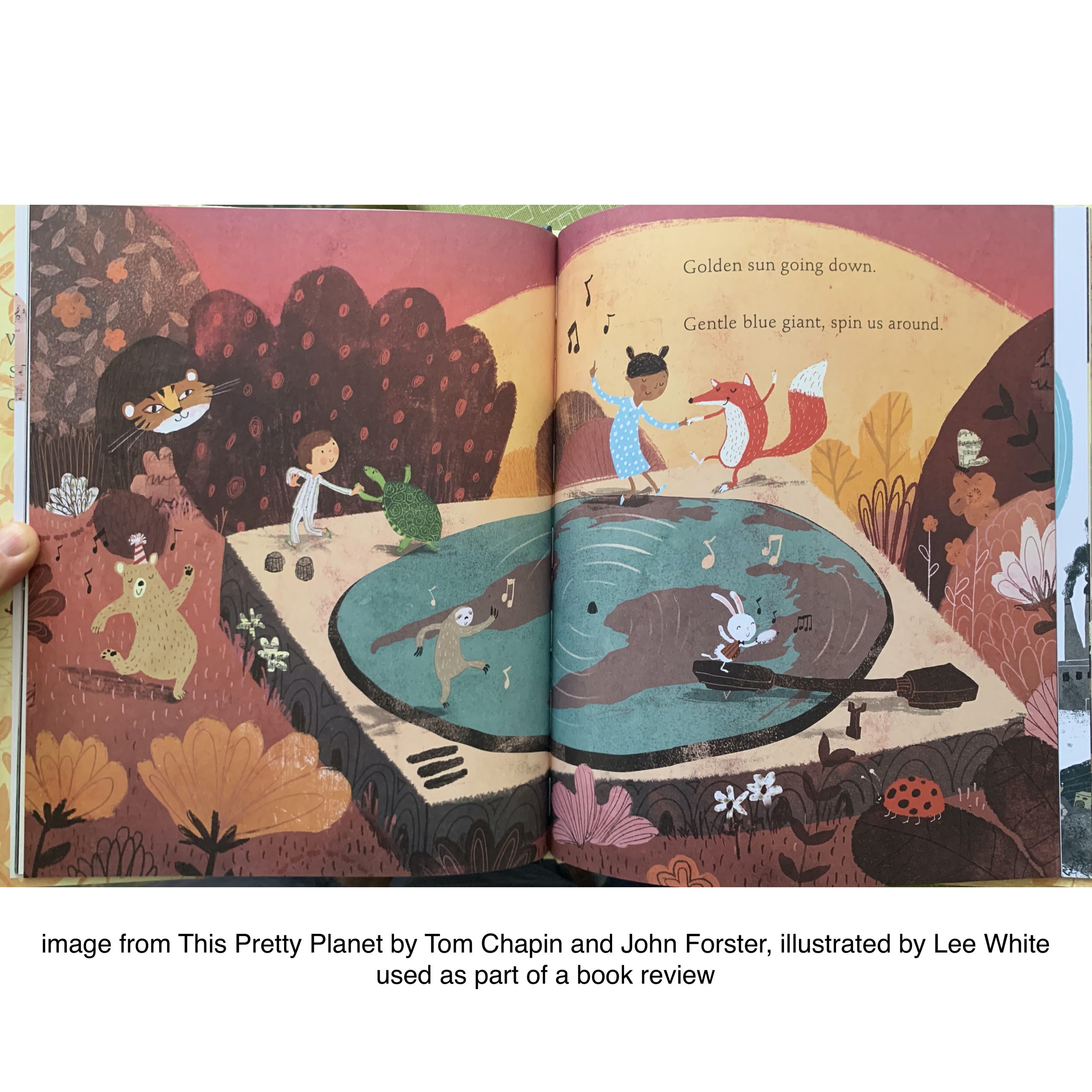
Weekend Dad by Naseem Hrab and Frank Viva. Groundwood, 2020. 9781773061085. After his dad moves out, a kid goes for their first weekend visit to their father’s new apartment. It’s clearly going to take them a while to think if it as their second home, which is what their dad is hoping for. (By the end the kid is clearly feeling better about the whole arrangement, and may even be excited about their new room.) The book includes an abridged version of a letter author Naseem Hrab’s father wrote to her when she was nine, but never delivered. According to an author’s note, she “found the letter while packing up the contents of [her] father’s home after he passed away and read it for the first time.” The whole book is a lovely tribute to him. Also worth noting: Viva’s art, particularly the way he draws people, makes the book feel friendly even when the people in it don’t look particularly friendly.   Cat Problems by Jory John, illustrated by Lane Smith. Random House Studio, 2021. 9780593302149. This cat has problems: the orange cat is in its spot, there are only a few kernels of dry food in its bowl, and there are many random noises in the house. Life is pretty boring and would be so much better if it could get outside, or just get some wet food. My favorite parts: all the mraowwwing, and the squirrel’s excited speech from outside, telling the cat how lucky it is.       This Pretty Planet by Tom Chapin and John Forster, illustrated by Lee White. Atheneum Books for Young Readers, 2020. 9781534445321. I don’t usually like picture books based on songs, but this one is amazing thanks to its slow pace and White’s illustrations, which tell a story based on the words but go well beyond merely illustrating them. (The art is so beautiful and cartoony!) Two kids explore our beautiful planet with joy and wonder, see it ruined by industry, and then make a difference by cleaning it up. There are lots of friendly animals in the book too!